

I'm a mountaineer with maybe two hundred logged climbs in Luzon. I know how people get lost: bad weather, bad maps, overconfidence, fatigue. I've helped carry people out. So understand that what I'm reporting is not disorientation. I know what disorientation feels like, and it isn't this.
Banahaw is a pilgrimage mountain — locals will tell you plainly that it's inhabited, and not just by people. Our guide, Kuya Bert, asked us at the trailhead to do the customary thing: say 'tabi tabi po' when passing the old balete, don't point at anything with a full finger, ask permission out loud before relieving yourself off-trail. Of our group of five, four complied. One of us — I'll call him R — thought it was funny to shout the opposite. You can see where this is going.
The descent from the spring to the trailhead is forty minutes of well-worn trail. We walked it for three hours. I want to be precise about what that looked like: we passed the same…
Continue readingHide remaining accountAbout 2 min remaining
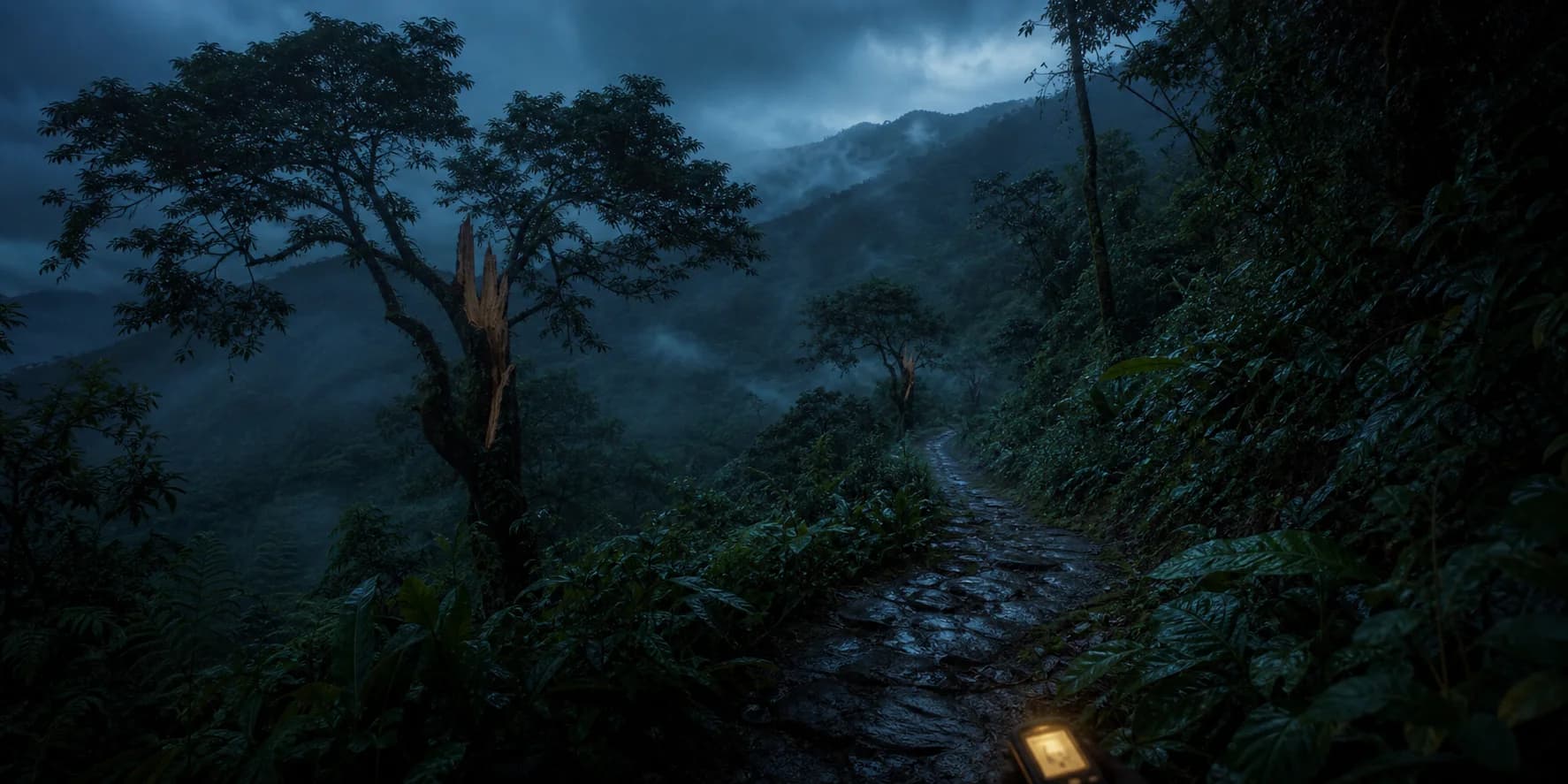
The descent from the spring to the trailhead is forty minutes of well-worn trail. We walked it for three hours. I want to be precise about what that looked like: we passed the same lightning-split mango tree four times. My GPS watch drew our track as a loop that crossed itself — on a trail with no loops. The compass bearing to the trailhead rotated between checks while we stood still. And it was quiet. Anyone who's hiked Philippine forest knows it is never quiet. No birds, no insects, for close to an hour.
Kuya Bert stopped us at the mango tree the fourth time. He didn't panic and he didn't explain. He told us all to take our shirts off and put them back on inside out. He then apologized to the forest — formally, loudly, on behalf of R, by name. R put his shirt on inside out without a word. He was gray.
We walked out in twenty-five minutes. The birdsong came back like someone had lifted a needle off a record and set it down again. At the trailhead there was a smell of rain, and it did rain, briefly and hard, out of a perfectly sunny sky — and Kuya Bert laughed and said someone was getting married, and wouldn't say anything else about it.
I logged the GPS track. I still have it. It's a loop that crosses itself on a trail that doesn't loop.