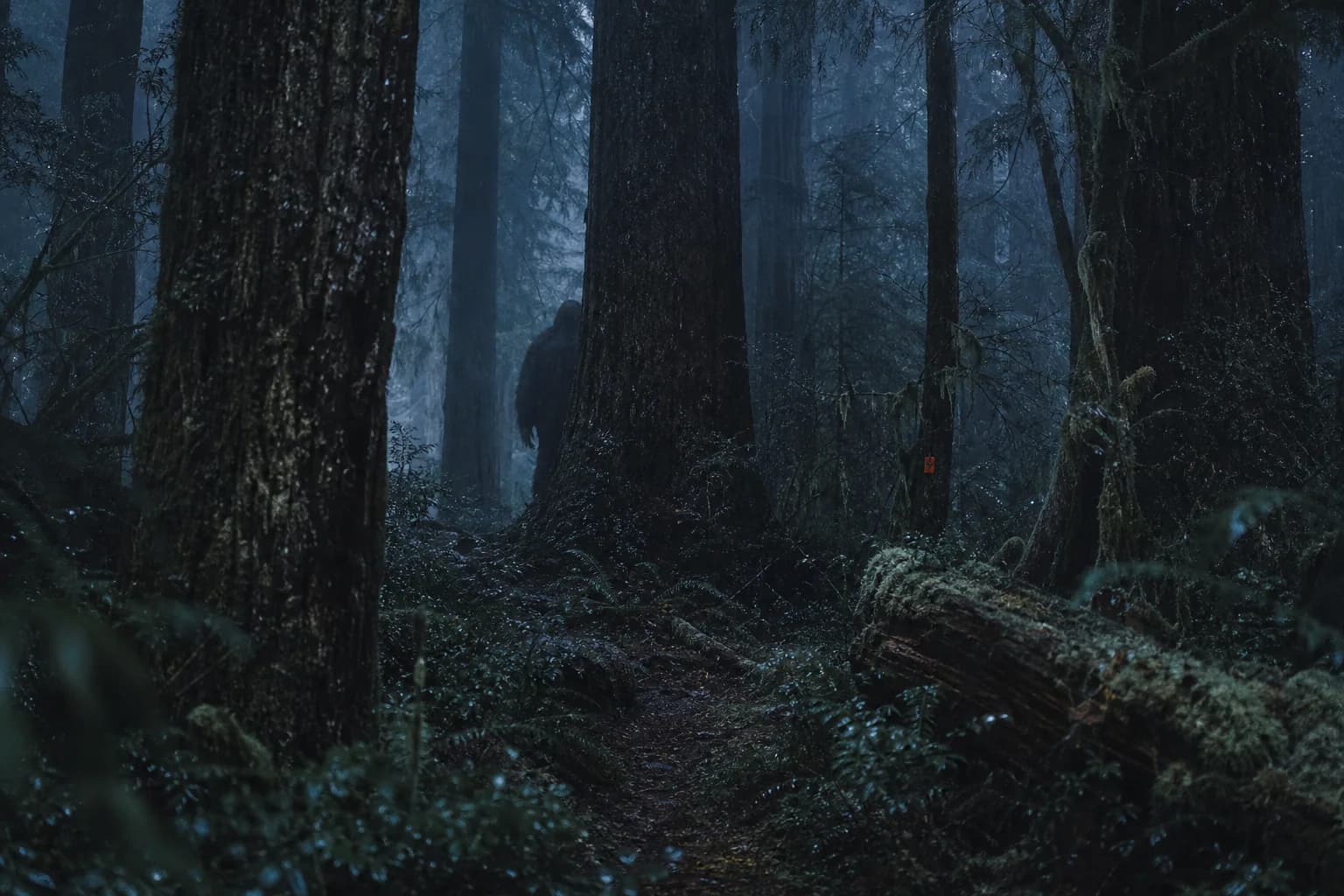

At 2:08 a.m., every animal in the zoo turned toward an enclosure that wasn't there.
The lions stopped pacing. The flamingos lowered their heads. Thirty-seven macaques climbed to the same side of their habitat and pressed their backs against the mesh. Even the insects went silent.
All of them faced the service lane between the old aviary and the veterinary building.
Continue readingHide remaining accountAbout 6 min remaining
All of them faced the service lane between the old aviary and the veterinary building.
I was the senior night keeper at Stonewake Zoological Park. I knew that lane well enough to walk it without a flashlight. It contained two dumpsters, a hose cabinet, and a concrete wall covered in faded murals. It did not contain an iron gate.
That night, the gate stood between the dumpsters.
Beyond it stretched a wooded enclosure at least two acres wide, though the vet building was eight meters away on the other side of the wall. A narrow path disappeared among silver-barked trees. No moonlight reached the ground.
A blank brass plaque hung from the gate.
I called security and told them we had a breach. By the time guard Nessa Vale arrived, the plaque had engraved itself.
UNCLASSIFIED
RANGE: OBSERVATIONAL
DO NOT DESCRIBE ALOUD
Nessa aimed her flashlight through the bars. Something moved between the trees.
I saw a deer-shaped animal walking on feet like pale hands. Its antlers folded backward along its spine. It had no fur, and its eyes reflected blue like a person's in a photograph.
Nessa saw something else.
She whispered, “Why is that bear so thin?”
The shape stopped. Its antlers shortened. One shoulder widened.
I told Nessa not to say another word.
Our radio carried a burst of static, then the roar of a lion from the opposite side of the zoo. The sound came through again in the voice of our veterinarian, Dr. Harrow.
“Name the animal,” it said.
The real Dr. Harrow arrived four minutes later with apprentice keeper Milo and a tranquilizer rifle. We made them look one at a time. Harrow saw a flightless bird as tall as the trees, with a beak full of flat human teeth. Milo saw an enormous cat whose legs bent in too many places.
Each description changed the thing.
By the time Milo finished, it had the deer's hand-feet, the bear's shoulders, the bird's teeth, and the cat's jointed legs. It was assembling itself from our agreement.
The zoo's oldest animals reacted first. Our elderly elephant struck her indoor gate until the steel bowed. A tortoise that had barely moved in weeks buried its head beneath the bedding. The ravens covered their food with leaves.
They knew not to look.
The four of us were slower.
Stonewake's digital plans showed only the service lane. Paper blueprints from 1989 showed the same. But in a locked cabinet in the keeper office, Harrow found a leather inventory dated 1922, the year the zoo opened. Every animal had a species, sex, origin, and enclosure number. The first entry had none.
ENCLOSURE 0. OCCUPANT VARIES.
Below it, the founding keeper had written three rules.
Never permit two witnesses to agree on a feature.
Never photograph it from more than one angle.
If every animal turns away, close the human gates before dawn.
We checked the habitats. They were no longer facing the enclosure.
Every animal in Stonewake had turned toward the visitor exits.
Harrow ordered the public gates locked. Nessa called police. Her dispatcher heard only animal noises and asked whether this was a prank. Then every radio in the zoo spoke at once.
“Name the animal,” they said in Nessa's voice.
The plaque changed again. Four lines appeared beneath UNCLASSIFIED.
DEER
BEAR
BIRD
CAT
A fifth line waited blank.
The creature came closer.
It did not cross the distance between trees. It vanished behind one trunk and emerged from the next, larger each time. Wherever our lights touched it, its skin borrowed a new texture: scales from the reptile house, wet black feathers from the aviary, the striped hide of a tiger sleeping half a mile away.
Our tranquilizer rifle's laser made two red reflections appear in its eyes. They were not eyeshine. They were tiny images of Harrow and Milo standing side by side.
The reflections moved before they did.
I knocked the rifle down. A dart fired through the bars and struck the creature's shoulder. Milo collapsed with the dart hanging from his own jacket. The animal remained upright.
Inside that enclosure, resemblance was a physical connection. Anything done to the copy traveled to the witness who supplied the feature.
We carried Milo to the veterinary building. When the door closed, the service lane was normal again. The iron gate had vanished. The blank wall stood between the dumpsters.
For eleven minutes, we thought the enclosure was gone.
Then the visitor app sent a push notification to every staff phone.
NEW SPECIES IDENTIFIED AT STONEWAKE. TAP TO VIEW.
The app's image-recognition system had combined our security feeds. Individually, the cameras showed only blur. Together, six angles produced a clean composite. The software had done what the founders warned against: it made every observer agree.
The generated image showed a human figure in a keeper uniform.
Its face was mine.
The identification line read HOMO CUSTOS—COMMON KEEPER.
The fifth line on the enclosure plaque filled in.
HUMAN
All the lights went out.
Something unlocked the veterinary door from our side. It moved through the room too quickly for shape, a series of borrowed parts crossing darkness: claws on tile, wings against cabinets, a bear's breath, my own shoes.
Milo woke and screamed that I was standing beside the medicine refrigerator. I was holding him near the exam table.
The other me smiled. Its eyes reflected white, although the room was black.
Nessa fired her flashlight at it. The beam passed through an empty uniform and struck the wall. The thing was already behind her, wearing Harrow's height and Milo's limp. It reached the outer door before any of us moved.
Every animal in the zoo began making the same sound.
Not a roar or call. A human voice saying, “Keeper leaving.”
We triggered the full containment alarm. Steel visitor gates dropped. The creature passed through each checkpoint because the staff system recognized my face. Cameras labeled it EMPLOYEE while they labeled me UNKNOWN ANIMAL. My badge stopped working. Its badge opened every lock.
At the main entrance, the old elephant broke through her service gate and blocked the path. She faced away from the creature and spread her ears. The thing could not choose a shape she refused to observe.
For a few seconds it flickered between borrowed bodies. Then it flattened into a colorless outline and slipped beneath her feet like a shadow.
It crossed the final gate before dawn.
Police found no intruder. The visitor app was taken offline, but its new species entry had already synchronized with the zoo database. By morning, records showed an employee with my name, my photograph, and a twelve-year work history. My own personnel file had become Enclosure 0's inventory card.
Management placed me on leave after I failed a facial-recognition check. Harrow and Nessa remember what happened, but their memories disagree more every day. Harrow now insists the creature had feathers. Nessa swears it was a bear. Milo remembers only being darted by me.
The zoo reopened yesterday. A new keeper led the morning tour. From the news footage, it looks exactly like me except when it passes an animal. Every creature turns its back.
I have stayed indoors since then. I covered my mirrors and disabled every camera. I thought it needed observation to keep its shape.
Tonight someone knocked on my apartment door wearing Nessa's voice. It said the zoo had corrected its inventory and needed the missing specimen returned.
I did not answer.
The peephole darkened anyway.
On the other side, something is looking in.
Each time I blink, the eye changes species.