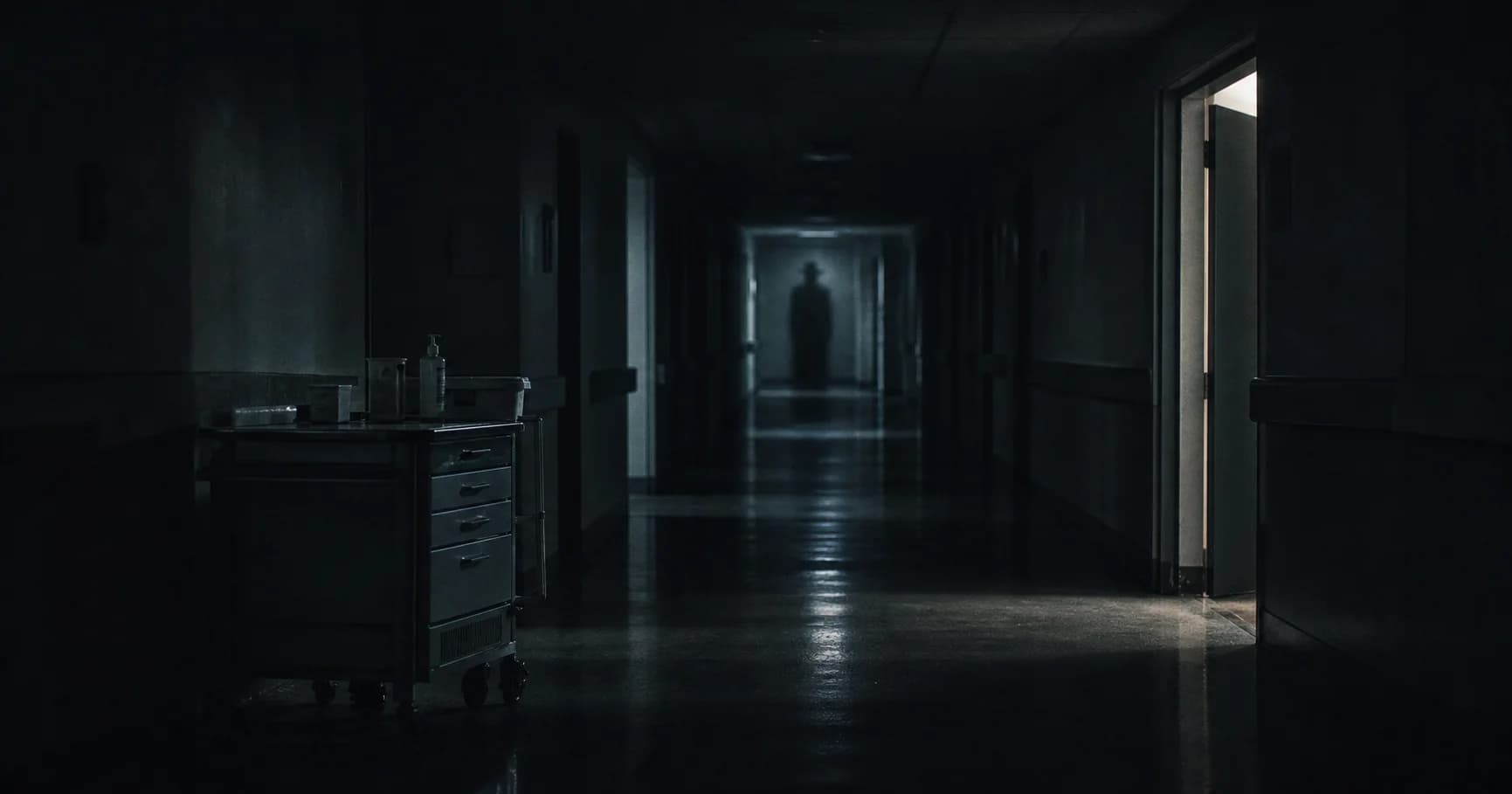

On Tuesday morning, my shadow went to work without me.
I saw it leave while I was tying my shoes. Sunlight came through the kitchen blinds, laying my shape across the floor. When I bent down, the shadow stayed upright.
Then it walked into the hallway.
Continue readingHide remaining accountAbout 6 min remaining
Then it walked into the hallway.
There was no body casting it. The dark outline slid over the cabinets, stretched across the wall, and disappeared beneath my apartment door.
I stood frozen until my phone rang.
My supervisor wanted to know why I was sitting at my desk with the lights off.
I worked in the basement records office at Bellwether City Hall. My commute took twenty minutes. I was still wearing one shoe.
“You just waved at me,” she said. “I can see you through the glass.”
I drove to work in six minutes.
My shadow was seated behind my desk. It appeared on the wall beneath the emergency light, shaped like me in profile, hands moving across the outline of a keyboard. My chair was empty. The computer was off.
When I entered, the shadow stood and crossed the room toward me.
It joined my feet without a sound.
Four minutes later, the power failed. Emergency lights came on. My supervisor asked me to restart the records server. I sat at my desk and typed exactly what the shadow had typed.
We called it a coincidence until everyone else's shadows began arriving early.
At 9:40, the mayor's shadow stepped onto the council chamber wall ten minutes before he entered the building. At noon, children watched their silhouettes run across the playground while their bodies remained lined up for lunch. A mechanic's shadow crawled beneath a truck, rolled away, and covered its head. Eleven minutes later, the jack failed. The mechanic survived because he copied the warning.
By evening, the whole town believed the shadows were showing us the future.
People recorded them. They used chalk to trace where the shapes stood and compared the outlines to what happened later. The delay was always precise.
Fourteen minutes on Tuesday.
Thirty-seven on Wednesday.
Two hours by Thursday morning.
At first, it seemed like a gift. A restaurant closed early after the cook's shadow pointed at a gas line. A school evacuated when hundreds of small shadows gathered outside instead of entering classrooms. The ceiling collapsed during second period. Nobody was hurt.
We began watching darkness more carefully than people.
If a shadow sat down, its owner found a chair. If it turned left, the person avoided turning right. We believed matching the movement kept us safe.
Nobody asked what happened when someone refused.
Jonah Pell found out.
His shadow appeared on the courthouse steps holding its hands around the throat of another shadow. The victim's shape belonged to his brother Daniel. The act was scheduled three hours ahead.
Police detained both men in separate buildings. They turned on every light and covered the windows. Jonah spent the afternoon handcuffed to a steel table while Daniel waited across town under guard.
At 4:12, Jonah's hands began closing.
He begged the officers to hold them open. His arms stretched toward empty air. Across town, Daniel rose from his chair and bent backward as if invisible fingers tightened around his neck.
Jonah never touched him.
Daniel died anyway.
On the courthouse wall, the two shadows completed their struggle and separated.
That was when we understood.
They were not showing the future.
They were setting it.
The delay reached six hours. Shadows left at dawn and acted out entire workdays before their owners woke. People studied recordings of what they were required to do. Anyone who resisted felt their body pulled toward the predicted motion. Bones dislocated. Muscles tore. The future corrected them.
My shadow became ambitious.
It signed forms I had never seen. It entered the restricted archive and opened a cabinet welded shut since the old city hall flooded. It removed a folder labeled UMBRAL MUNICIPALITY — 1908.
When my body caught up, I tried to stay away.
At the scheduled time, my legs carried me downstairs. My hand entered the key code although I did not know it. The welded cabinet opened like a mouth.
Inside were photographs of Bellwether taken in 1908.
Every street was empty. Shadows filled the sidewalks without bodies. They wore hats, pushed dark strollers, and waited in line outside shops. On the back of each photograph, someone had written the same sentence:
THEY PRACTICE UNTIL WE ARE UNNECESSARY.
The final image showed city hall at noon. A woman stood on the front steps surrounded by hundreds of shadows. Her face had been scratched away.
She wore my coat.
That night, shadows stopped returning to their owners.
They gathered in the central square instead, overlapping until the pavement looked covered in oil. Thousands arrived from homes, hospitals, animal shelters, even the cemetery. They stood shoulder to shoulder beneath streetlights, though no bodies were nearby to cast them.
At midnight, every light in town went out.
The shadows remained visible.
They were darker than darkness.
They began rehearsing.
We watched on security cameras as they entered houses, drove cars, carried groceries, embraced spouses. They practiced our lives at impossible speed, repeating each action until their movements became smooth.
Then they practiced burying us.
The emergency broadcast told residents to evacuate before sunrise. Cars filled the highway. Families drove toward neighboring counties.
Their shadows were already waiting at the county line.
When the sun rose, every vehicle stopped. Drivers climbed out in unison, walked to the roadside, and stood where their silhouettes had marked the ground. The shadows attached themselves to new owners.
The people returned home smiling.
They moved half a second too early.
I escaped because my job was underground. The records basement had no windows, and when the blackout began I locked myself inside the old archive. I thought complete darkness would protect me.
It did for twenty minutes.
Then a shadow appeared on the wall.
Mine.
There was no light source.
It sat at the records terminal and typed this account. I watched words appear on the dead screen hours before I wrote them. At the end, it stood and pressed both hands against the wall.
The concrete bulged outward beneath its palms.
Now my body is catching up.
I have typed every sentence exactly as the shadow did. When I try to change a word, my fingers cramp until they correct it. The terminal has no network connection, but the page says it is publishing.
The clock above the door runs six hours fast, yet its second hand matches my pulse. Each time it completes a minute, another line appears below before I type it.
Outside the archive, something wearing my supervisor's voice keeps asking me to turn on the lights.
My shadow is no longer on the wall.
It is standing behind me.
I can feel its hands lifting toward my shoulders before mine are ready to move.
If your shadow ever moves before you do, do not follow it. Do not treat it as a warning. Every copied gesture teaches it how little resistance your body can offer.
Turn off the lights while you still control your hands.
And if the darkness keeps your shape, run somewhere the future has never seen you.