

I've been a night-shift nurse for eleven years, and hospice care has a folklore of its own. Every nurse who's worked end-of-life will tell you about the reaching, the greeting of unseen visitors, the way patients rally right before the end. That's ordinary. That's human. This wasn't that.
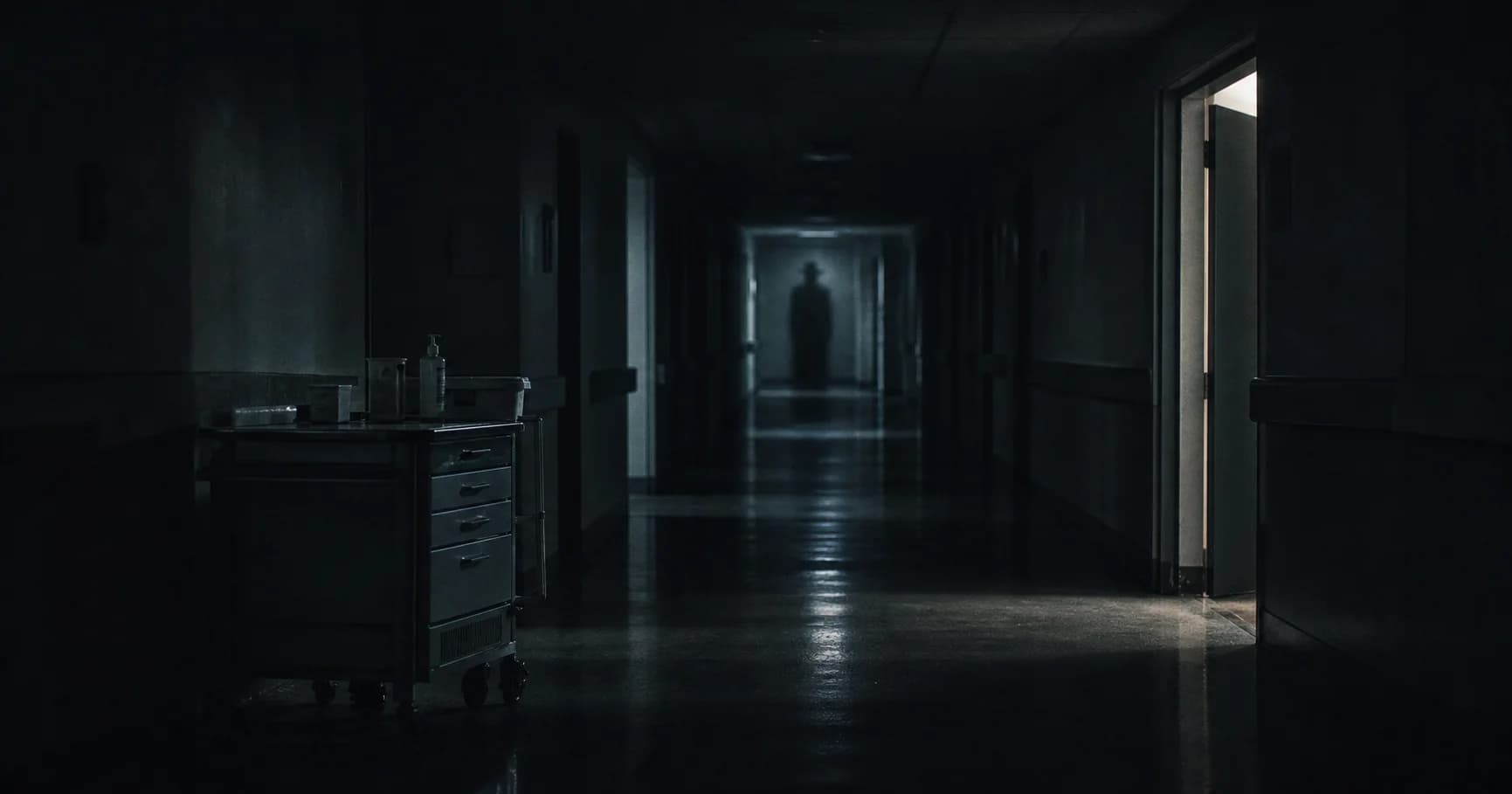
Room 214 held a man in his eighties, comfortable, non-verbal for days. At 3:10 a.m. I was charting at the station, which has a straight sight line down the corridor. The corridor lights don't turn off. There are no visitors at 3 a.m. There is no angle where a person could cast a shadow onto that stretch of wall.
A figure crossed the corridor from the direction of the family lounge and stopped outside 214. Tall — I'd say six-five or more — wearing what I can only describe as a wide-brimmed hat and a…
Continue readingHide remaining accountAbout 1 min remaining
A figure crossed the corridor from the direction of the family lounge and stopped outside 214. Tall — I'd say six-five or more — wearing what I can only describe as a wide-brimmed hat and a long coat. Not 'a shadow that looked like' those things. The shape was exact, tailored, and flat. It didn't have depth the way a person does. It was a cutout in the light.
It stood at the door of 214 for three or four seconds. It did not turn its head, but I have never lost the certainty that it was aware of me watching — the way you can feel someone reading over your shoulder. Then it went into the room. It didn't open the door. It went in.
My patient passed at 3:42 a.m. Peacefully, in his sleep, thirty minutes after I called his daughter per his care plan. I've seen death arrive dozens of times, and I'd made my peace with it being a process. That night is the only time I've seen something come to collect.
I didn't chart the figure. There's no field for it. But my charge nurse, twenty-two years on nights, listened to me in the break room and said, 'Tall, hat, coat?' before I got to that part. She'd seen him twice. Same wing.