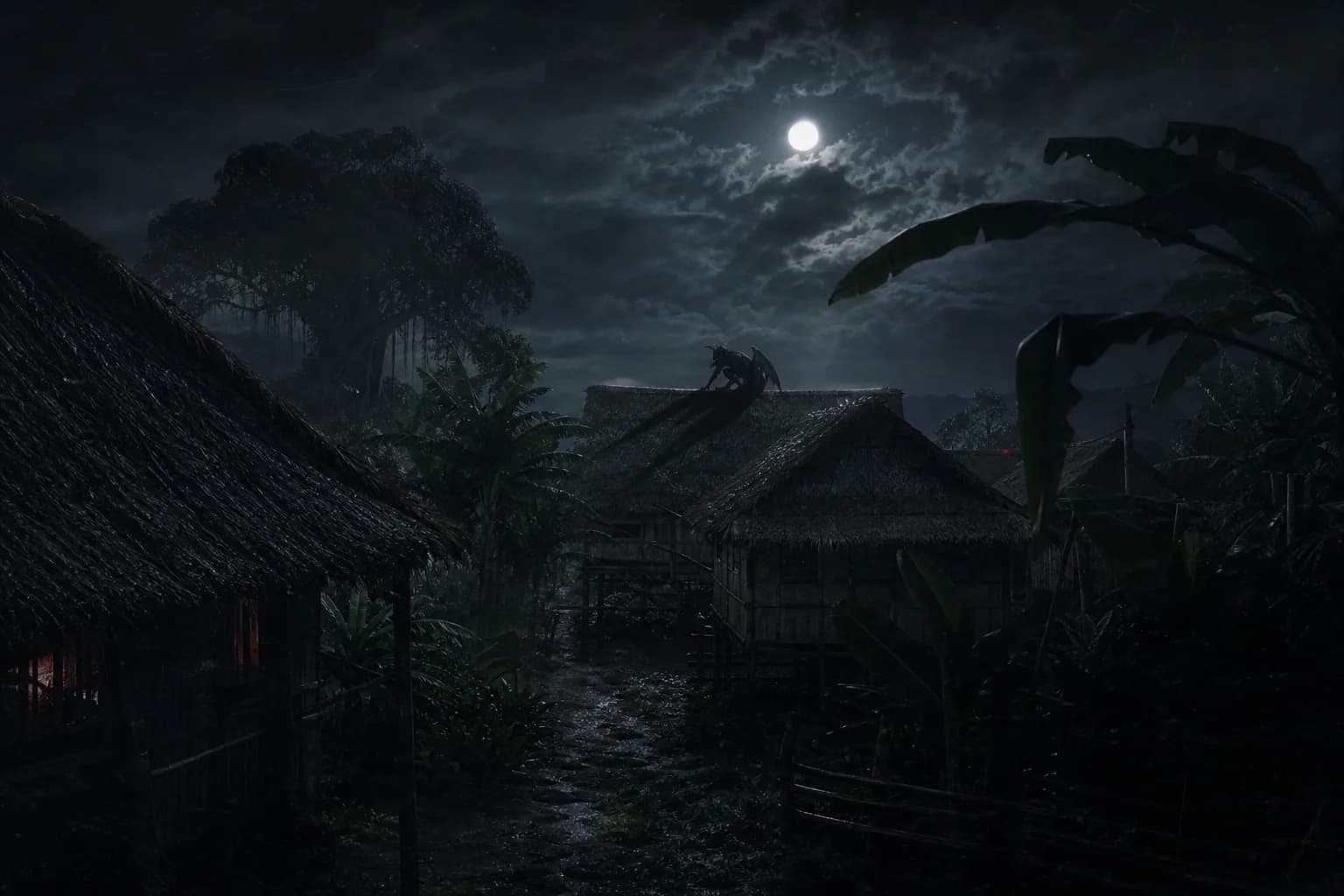

French Canada's werewolf, and a distinctly Catholic one: the transformation is not a bite but a penalty. The traditional cause is a lapse of religious duty — seven years without Easter communion in the most cited version — after which the offender runs the rangs at night as a wolf, a dog, or something less classifiable, retaining nothing of themselves but the eyes. Human eyes in an animal face are the diagnostic detail in nearly every Quebec account.
The folklore's release mechanism is precise: the loup-garou is freed if another person draws its blood — a cut is enough — and afterward, neither party may ever speak of it. Habitant tales are full of neighbors who bled a strange dog on a winter road and pointedly changed the subject for the rest of their lives.
The 1766 Gazette de Québec notices — warning readers of a loup-garou 'roaming the environs of Quebec' as straight news — remain the archive's favorite piece of colonial print. Modern reports come from the Laurentians, Lanaudière, and, in one well-documented 2025 case, the wooded flank of Mount Royal in Montreal itself.