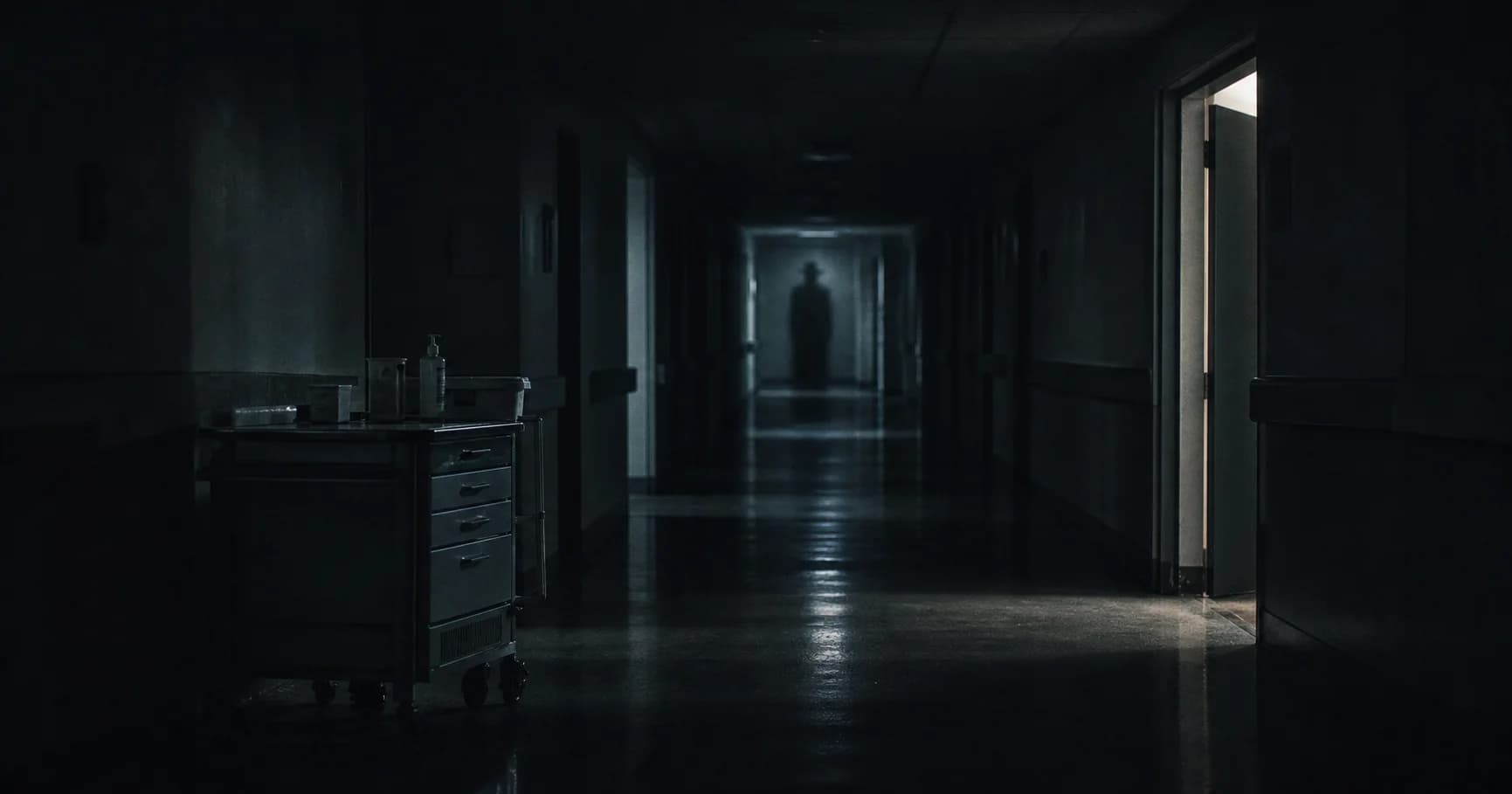

At 3:07 a.m., Turbine One recorded a footstep on the seafloor. Eleven seconds later, Turbine Two recorded the next.
Tern Shoal Wind Array had forty-two turbines arranged across eighteen miles of open water. Each steel tower was driven deep into the seabed and fitted with vibration sensors sensitive enough to detect a dropped wrench. My job was to distinguish harmless movement from cracks, loose bearings, and foundation failure.
The impact at Turbine One did not resemble machinery. It began in the mud, climbed the monopile, and rang through the tower like a struck bell. Then the same signal appeared at Turbine Two,…
Continue readingHide remaining accountAbout 6 min remaining
The impact at Turbine One did not resemble machinery. It began in the mud, climbed the monopile, and rang through the tower like a struck bell. Then the same signal appeared at Turbine Two, half a mile away. Eleven seconds later, Turbine Three shook.
Whatever caused it was walking east at more than one hundred miles an hour.
I was aboard the maintenance vessel Lark with Captain Sloane and Remy, our remotely operated vehicle pilot. Wind speed was eight knots. The sea lay almost flat. All forty-two rotors turned at identical lazy speed beneath low clouds.
By 3:15, the impacts had reached Turbine Forty-Two. They stopped for one minute and began again in reverse order.
Remy lowered the inspection vehicle near Turbine Thirty-Nine. Its camera descended through green water and curtains of drifting plankton. At two hundred feet, the tower's foundation emerged from darkness, furred with mussels. Nothing moved.
Then a red light blinked beneath the ROV.
Turbine warning lights are mounted hundreds of feet above the ocean so aircraft can see them. The camera showed their reflections glowing on the seafloor, one red point below every tower. There was no optical path that could put them there.
The light beneath Thirty-Nine blinked twice. The aviation beacon above us blinked once.
Remy turned the vehicle toward it. The red point split into two and rose.
They were eyes.
For three seconds, the floodlamps outlined a vertical shape standing in water deep enough to bury a building. It was darker than the surrounding sea, with shoulders level with the ROV and legs continuing down beyond the camera's range. Its surface did not shine like skin. Currents passed through it, carrying fish and silt, yet its outline remained human.
The eyes reflected red because they were looking upward at the turbine lights.
The ROV's depth alarm screamed. The camera shot toward the surface without the winch turning. Something had lifted the vehicle two hundred feet in less than a second. Its tether came aboard coated in black mud and wrapped around three enormous fingerprints.
Captain Sloane ordered us out of the array. Before she could increase throttle, every turbine stopped rotating.
The wind had not changed. Forty-two sets of blades froze at the same angle. Our navigation screens went black and returned with a single line of text: LISTENING FOR SOURCE.
The impacts resumed.
This time they did not travel tower to tower. They struck beneath our hull.
One step lifted the bow. Another lifted the stern. The Lark settled between them as if something on the seabed had walked underneath us without noticing the ship overhead. A low-frequency vibration passed through the deck, too deep to hear but strong enough to blur our vision.
Remy opened the hydrophone channel. The signal became audible when he raised it several octaves.
It was not footsteps. It was counting.
Each impact copied a turbine's generator frequency. Forty-two different pitches sounded in sequence, as though the thing below had learned the array by touching every foundation. After the forty-second tone, it produced a forty-third frequency that belonged to no machine we had installed.
Fog closed around the vessel. Our radar showed forty-three towers.
The extra return stood directly ahead.
We approached because the compass spun and every heading pointed toward it. A dark column appeared in the fog, wider than a turbine and leaning slightly with each swell. No navigation light flashed at its top. Instead, red lights opened one after another down its length, descending below the waterline.
Captain Sloane aimed the searchlight upward.
The beam found no steel. It found a wet surface crossed with grooves like tendons. Barnacles the size of dinner plates covered it in vertical rows. Near the height of our wheelhouse, a shape resembling a handprint had been scraped clean.
The column bent toward us.
Sloane threw the engines into reverse. The vessel did not move. Sonar showed five long contacts wrapped around the keel. The extra tower was not a tower. It was one of the thing's fingers planted upright in the sea.
A turbine blade swept through the fog overhead, though all rotors remained stopped on our monitors. Another followed beneath the water, passing under the hull as a moving shadow. The creature had learned the machines' shape, but not which parts belonged above the surface.
Remy triggered the ROV's emergency tether cutter. The severed cable snapped into the fog. Something released the keel to catch it. Sloane used that instant to drive the Lark between Turbines Twenty and Twenty-One.
The farm woke behind us.
All forty-two rotors spun without wind. Their tips broke the sound barrier one after another, producing cracks that chased our vessel toward shore. Tower lights blinked in pairs below the water. The footsteps moved alongside us, covering half a mile with every stride.
I accessed the emergency controls and feathered each turbine, taking them offline row by row. Every shutdown removed one pitch from the counting. The shadow below grew less distinct. At Turbine Six, only its red eyes remained. At Turbine One, the sea went dark.
The last impact struck the export cable carrying the farm's electricity to land.
Then the footsteps left the water.
The coast substation called at 3:49. Their underground vibration sensors had detected a moving load beneath the cable trench. It crossed the beach without leaving tracks, passed under the perimeter fence, and stopped below the main transformer.
We reached harbor at dawn. The Lark's keel bore five dents shaped like fingertips. Black seabed mud covered the mast sixty feet above the water. Remy's ROV was never recovered.
Company investigators blamed synchronized sensor failure and ordered the array restarted. They refused to suspend power because the morning grid demand was high. At 7:00, Turbine One came online.
A footstep sounded beneath the coastal substation.
At 7:01, a neighborhood transformer half a mile inland shook hard enough to trip. At 7:03, another impact registered beneath the next transformer east. The sequence followed the electrical network, not roads or terrain.
The thing had not been walking between turbines. It had been learning how power connected them.
Tern Shoal is operating again. Public tracking sites show forty-two turbines, but our maintenance dashboard still lists a forty-third generator. Its output is always zero. Its location changes whenever the grid reroutes electricity.
I resigned and moved two states inland. I unplug everything before dark. It makes no difference. Every night at 3:07, the power meter outside my apartment records forty-two brief surges and one long pause.
Last night, the streetlights began blinking in pairs from west to east. Between flashes, I saw a human-shaped darkness standing behind each pole, taller every time it appeared.
The final light is outside my window.
It has not blinked yet, but the floor is lifting beneath alternate footsteps, and something below the building has begun counting in the pitch of my refrigerator.